





Acceptance In Northern Thailand: Traveling At The Speed Of Your Nervous System
Trails change slower than our stories about ourselves.
Acceptance grows from watching what does not move when we struggle.
Sitting With What Stays
In Pang Mapha, mornings start quiet, before any scooter passes the house.
I sit on the bamboo step, feel the cool plank under my legs, and just breathe.
Some days the breath feels smooth, like it knows where to go without help.
Other days it breaks in the chest, shallow and tight, as if holding back speech.
Nothing outside changes very much, yet the whole inner weather seems different.
Acceptance began for me as a small question, not a practice, and not a goal.
The Principle of Letting Be
Acceptance is not approval, it is contact.
It is the moment you stop editing the present and simply admit, "This is here."
Like gravity, you do not have to like it for it to work on you.
If you jump from a rock by the Pai River, the body falls whether you agree or not.
The body already understands acceptance, because it always lives in current conditions.
The mind tries to live five steps away, in repair mode, fixing what has not happened.
Local Ground, Local Pace
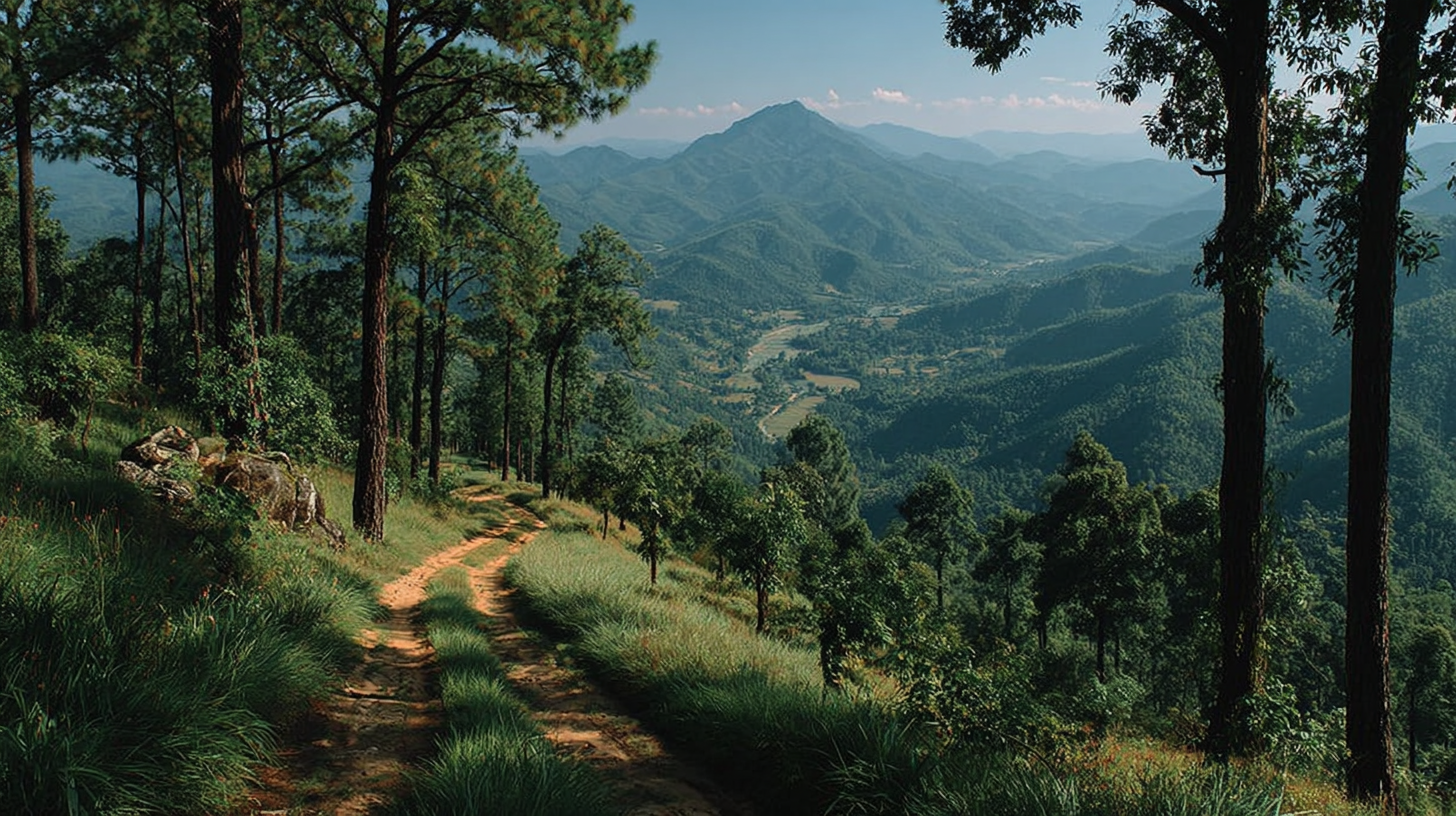
Up here, the road from Pai to Pang Mapha teaches this gently and then sharply.
In the dry months it is clear, curves open, and riders lean with confidence.
First big rain, the same curves feel different, edges slick and visibility soft.
Drivers from the city sometimes try to keep their old speed, same line, same push.
The older guides from Tham Lod slow before the first bend without speaking.
They do not argue with the wet pavement, they adjust their weight and accept it.
This is not passivity, it is intelligent surrender to what is already true.
Push against wet asphalt with dry season habits, and the ditch arrives fast.
The Body as Honest Map
The body tells the truth long before language decides its version.
When a guest comes to my small retreat space, I watch their shoulders first.
Some hold them like a shield, lifted and tight, even while they smile politely.
Others drop into the chair as if gravity finally caught them after a long chase.
We begin with simple breath noticing, not correction, and not performance.
"Just feel where the inhale stops on its own," I say, "and leave it there."
Often, the inhale cuts short at the collarbones, like an unfinished sentence.
No one has done anything wrong; they have just been holding themselves up for years.
To accept this is to say, "Of course the breath is tired, look at what it carries."
There is relief in naming the fact, without rushing to stretch or fix it.
Messy Hearts, Uniform Rituals
Acceptance is rarely neat.
People arrive in Pang Mapha with tangled reasons, failed plans, and blurry hopes.
One guest came after a breakup, another after closing a family shop in Chiang Mai.
They both sat at the same low table in my yard, sipping bitter chrysanthemum tea.
The reasons were different, but the way their hands wrapped the cup was almost the same.
A small, steady hold, like the clay might steady them in return.
In the village, we have simple uniform rituals for messy inner states.
When someone loses a relative, neighbors show up with rice, candles, and silence.
No one tries to fix the grief, or explain it away as destiny.
They sit, sometimes all night, breathing the same air, letting the ache move as it must.
Shared presence is often the softest form of acceptance.
The structure of the ritual holds what words cannot straighten.
Extreme Edges, Soft Centers
Acceptance matters most where we resist it the hardest.
A farmer here lost half his maize one year to a sudden storm.
I watched him stand by the field the next day, trousers damp, face unreadable.
He did not curse the clouds, he did not praise them either.
He took a long breath, spat to the side, and said only, "Next season different."
That sentence was not optimism, it was adjustment without denial.
He still had to feel the loss, count the numbers, and face the debt.
Yet he did not spend extra energy arguing with the rain that already fell.
This is an extreme form of acceptance, rooted in survival, not philosophy.
In quieter lives, we deal with smaller storms, like plans that fall apart.
The principle is the same: stop fighting the fact, then choose your next move.
The Way We Walk Together
For Waykeeper, the simple question is always, "What is actually here, on this path."
Not, "What should be here," or, "What used to be here five seasons ago."
Guides in Northern Thailand carry this attitude in how they speak of trails.
A route is not "perfect," it is dry, or muddy, or washed out after last week.
Visitors often come with fixed stories about their journey or healing.
Sometimes they feel disappointed when the retreat is noisy, or the hike is crowded.
In those moments, I watch how quickly they tighten against what they found.
To accept is not to give up on quiet or beauty, it is to start from truth.
Then a new option appears, like taking a side path that was not in the brochure.
Waykeeper trusts the guide who describes the trail as it is, not as it markets.
That honesty is a form of acceptance, shared between land, guide, and traveler.
A Small Closing Breath
Tonight, as crickets start their steady ringing, the room feels slightly crowded inside.
Old thoughts come up again, the persistent ones about choices and timing.
I sit at the wooden table, place one hand on the stomach, one on the chest.
I do not lengthen the breath, I simply watch where it reaches and where it does not.
There is tightness, there is space, and there is also the simple fact of sitting here.
Nothing miraculous happens, but the argument with reality softens at the edges.
Acceptance is not a finish line, it is a way of standing on the same ground as your life.
Inner and outer journeys only begin to match when we stop insisting they must.
Related blogs
Lorem ipsum dolor sit amet consectetur. Adipiscing eget risus tempus facilisis scelerisque vitae consectetur vitae. Amet faucibus venenatis donec mattis.



Pai District,
Mae Hong Son Province
58130, Thailand


