


Curiosity Walks: Letting Northern Thailand Teach You Slowly
Curiosity on trail starts as a small itch, not a big idea.
It comes when a side path appears, half hidden by grass, and your feet slow.
Curiosity matters because it keeps you moving toward what you do not yet name.
Like water looking for a gap in limestone, it follows the slightest opening and reshapes the ground it passes.
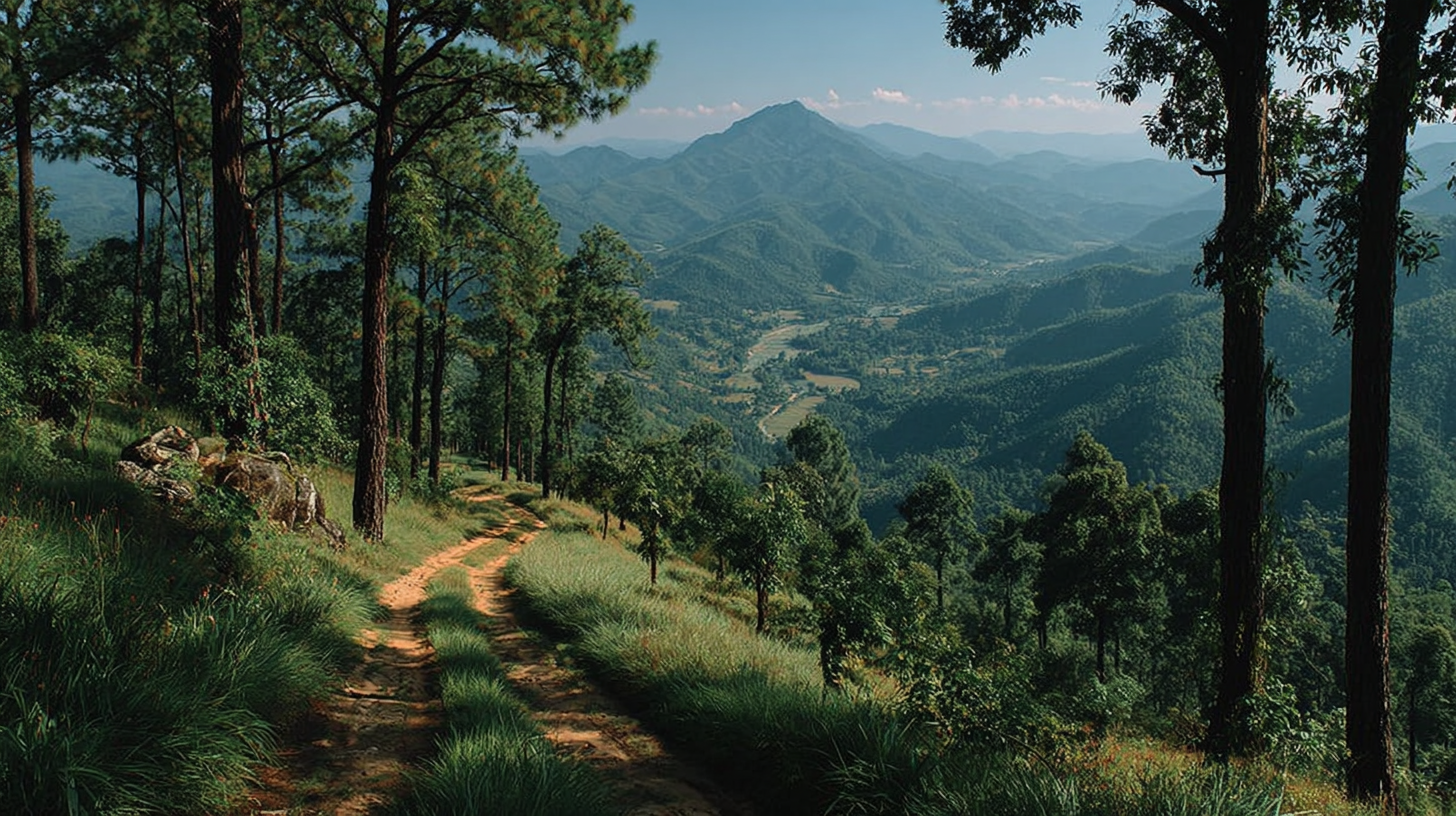
On the ridge above Thung Ton Ngio, the main track drops clean toward the valley, but a faint hunter path cuts along the contour into thicker forest.
I watched three guests glance at it, then at me, and only one asked, very quietly, where that smaller way might go.
In these hills, questions often start with a direction, not a sentence.
People in Ban Pha Mon tilt their chin toward a slope or a gully and say only, "Up there, many stories."
One dry season, I followed a Karen hunter who carried nothing but a slingshot and salt.
He walked without hurry, yet he checked every print in the dust, telling from one hoofmark how many days had passed since the animal drank.
Curiosity, used well, is slow and specific, not loud and wide.
It looks like stopping to feel one leaf, or asking why one field stays green when the others burn.
On the jeep track from Soppong to Huay Hee, tourists often ask only, "How long to the village."
The older women riding in the back of the truck ask a different thing, "How is the stream this year, still clear."
Small questions shape how you read the land, because they pull your eyes to finer patterns.
Like looking at clouds, if you ask only about rain, you miss how wind layers them in thin, moving lines.
Near Ban Muang Pon, a boy once stopped me at the bamboo bridge and pointed at a row of rocks.
He did not ask my name, he asked why the water always curled the same way around one stone, even in flood.
On ridge walks between Pai and Pang Mapha, I use curiosity as a safety tool.
If someone asks nothing for one full hour, I know they are either hiding fear or drifting into careless trust.
One guest from Bangkok walked with headphones, eyes on his shoes, for the first three kilometers above Ban Rak Thai.
Then we reached a burned slope, and he finally pulled the headphones off to ask why one singed tree still stood green.
Curiosity often wakes when comfort drops, like temperature after sunset on a high pass.
As the wind rose at Doi Pui Leng, people started to ask where the path sheltered, and who slept out here in winter.
The guides I trust in Mae Hong Son all have the same habit, they ask more of the forest than of their phones.
They notice which bamboo flowers in which year, how late the cicadas started this hot season, which ridge now holds fewer birds.
One Black Lahu guide near Ban Pa Khaa keeps a small paper notebook in a plastic bag.
On each trek he writes one line only, a single thing he saw that did not match last year.
Curiosity is also how respect begins, because you cannot care for what you never really see.
In Ban Jabo, the elders say that if a child never asks about a tree, that tree will be cut faster when money comes.
I walked once with a teenager from Chiang Mai who was bored of "villages that all look the same."
After three days of rain on the Mae Lana karst, he started asking why one hamlet stored rice in the house and another in a raised granary, and his face changed when he listened to the answer.
Sometimes curiosity is blocked by shyness, especially across language and age.
On the dirt road to Ban Huay Pu Keng, visitors whisper their questions as if they might offend, and end up saying nothing at all.
The best mornings start with the guides' own quiet questions, spoken to no one in particular.
At the tea shop in Pang Mapha market, I often hear them ask the sky out loud, "Will the fog hold in the valley or climb today."
Field work teaches that curiosity lives in the body before it reaches the mouth.
Your feet angle toward the sound of water, your shoulders relax when the air changes, long before you say, "Is there a stream down there."
On a hot day above Ban Mae Sae, one guest kept drifting toward every patch of shadow without noticing.
Later she asked why my route zigzagged between lone trees, and only then felt how her body had already traced that logic.
Children in the hills learn by pointing and touching, long before anyone gives a full explanation.
In Ban Nam Lod, I watched two cousins tap each stalactite with a twig, then argue softly about the different sounds, building their own names for each tone.
Not all curiosity is useful, and trails show that too.
Cutting every side track just to "see where it goes" can lead you into confused cow paths and crumbly gullies.
So guides learn to pair curiosity with a simple filter, "Is this question worth the energy and risk right now."
On the long traverse from Kong Lom to Wiang Haeng, we passed many inviting spurs, but the sky held a faint yellow cast that warned of storm dust, so we stayed high and straight.
Sometimes the quietest questions are about people, not land.
In Ban Mae Um Long, a guest once asked why one house had no dogs, while every other yard rang with barking.
The host answered with a story about an old bite and a lost child, and the whole group sat still, feeling how curiosity can open a tender room.
On other days, the questions are simple and physical, like how to tie a basket or sharpen a blade.
In Huay Tong Ko, I watched a Hmong woman stop a trekker mid-swing and show them how to hold the machete so the wrist would not ache by evening.
Curiosity threads through every step of community based trekking, if you let it.
It shapes which homestay you choose, which story you listen to, and how you handle land that does not belong to you.
When we plan routes with local groups, the best ideas often start as someone asking, "What if we followed the old salt path again, just once."
From there, new trails appear that are actually old, and lost skills return because someone dared to ask a small, specific thing.
In the end, curiosity is not about collecting answers, it is about walking with better questions.
The hills here reply in their own time, and usually with another puzzle, so movement stays honest.
On clear evenings above Pai canyon, when the last light leaves the sandstone, there is always one question that comes without words.
It sits quietly between the body and the land, a simple pull that says, "Look closer, then walk on."
On trail, that is enough, because the direction of your questions is the line of your life.
Related blogs
Lorem ipsum dolor sit amet consectetur. Adipiscing eget risus tempus facilisis scelerisque vitae consectetur vitae. Amet faucibus venenatis donec mattis.


Pai District,
Mae Hong Son Province
58130, Thailand


